Find It Without Unpacking Everything: A Better Way to Label Moving Boxes
Moving boxes have a way of looking identical once they're stacked together. Even when you've packed carefully, finding your coffee maker, winter clothing, or important paperwork can turn into an unnecessary search if every carton has a vague label. Learning how to label moving boxes for storage is one of the simplest ways to keep track of belongings during a move. A good system tells you what's inside each box, where it belongs, and whether you'll need it soon. For people relocating, our storage options in Littleton, CO can provide a place for belongings that won't fit into the new home immediately.
What Information Should Go on a Moving Box Label?
A useful label needs enough detail to identify the contents without requiring you to open the carton. Writing only "Kitchen" or "Bedroom" might help movers unload, but it won't tell you which box contains your everyday dishes. Each box should have three basic identifiers: its destination room, a short description of the contents, and a unique box number. Add handling instructions when an item requires special care.
For example, a box labeled "Kitchen, K-04, Everyday Plates and Bowls, Fragile" tells you considerably more than one marked "Dishes." The room name identifies where the carton belongs. The contents description helps you find a particular item, and the number connects the physical box to a more detailed inventory.
Start With a Room-Based Labeling System
Before packing, assign a simple code to each room. You don't need complicated software or an elaborate filing system. A few letters and a number are enough.
A practical system might look like this:
- K-01: Kitchen, pots and pans
- K-02: Kitchen, baking supplies
- BR-01: Bedroom, folded sweaters
- LR-01: Living room, books
- BA-01: Bathroom, extra towels
Number each box consecutively within its room. If you pack another kitchen carton later, give it the next available number rather than trying to reorganize the existing labels. This system works especially well when some boxes are going into storage while others are headed directly to your new home. You can identify belongings by their assigned room even when they're temporarily stored somewhere else.
Label Boxes With Their Destination, Not Their Original Room
The room where an item currently sits isn't necessarily where it belongs after moving. A printer kept in a bedroom might be going into a dedicated home office, while holiday decorations may be headed into a storage unit. Label boxes according to their intended destination. This prevents movers from placing cartons in the wrong rooms and reduces the amount of rearranging you'll need to do after unloading.
If the destination isn't settled yet, assign the box to a clearly identified holding area rather than guessing.
Write Specific Descriptions of Box Contents
Detailed labels become particularly important when belongings will remain in storage for several months. It's easy to remember what's inside a carton immediately after packing, but that memory becomes less reliable over time. Instead of writing "Miscellaneous," identify the contents by category. "Desk Cables and Chargers" or "Winter Jackets and Scarves" provides enough information to locate the right carton without recording every individual object.
For mixed boxes, list the two or three main categories on the label and put the complete contents in your inventory. Keep unrelated items together only when doing so makes sense for their weight and protection requirements. Avoid labeling a carton based on one small item when most of its contents belong to another category. The description should reflect what someone will actually find when opening it.
Where Should You Put Labels on Moving Boxes?
Labels should remain visible after boxes are stacked. Writing everything on the top is a common mistake because the information disappears as soon as another carton is placed above it. Place the main label on at least two adjacent sides of the box. You can also add a label to the top for easier identification while packing or carrying it.
Use a permanent marker with dark, readable lettering or printed labels that adhere securely to cardboard. If you're using colored tape, don't rely on the color alone to identify the box. For containers with lids, label both the container and the lid. Lids can become separated during packing or rearranging, particularly when several containers are the same size.
Should You Use Color-Coded Labels?
Color coding is useful when several rooms are being packed simultaneously. Assign one color to each destination, then apply the corresponding tape or sticker to every box from that room. For example, blue might represent the kitchen and green might represent the living room. Movers can identify the correct destination quickly without reading every description. Still, write the room name and box number on each carton. Colors are easier to confuse under poor lighting, and a written label remains useful if tape becomes damaged or falls off.
Create a Moving Box Inventory
A box inventory connects your labels to a record of everything you've packed. This becomes particularly useful when belongings are divided between a new home and a storage unit. A basic spreadsheet or notes document is sufficient. Include the box number, destination room, contents, and current location. You can use a simple list like this:
- K-01: Everyday dishes. Destination: New home, kitchen.
- K-02: Holiday serving dishes. Destination: Storage unit.
- BR-01: Winter clothing. Destination: Storage unit.
- OF-01: Printer accessories. Destination: New home, office.
- LR-01: Books. Destination: New home, living room.
As you pack, update the inventory rather than trying to reconstruct it afterward. When a box moves into storage, mark its new location in the record. If you rearrange cartons later, update their positions. An inventory is most useful when it reflects where belongings actually are, not where you originally intended to put them.
Should You Photograph Box Contents?
Photographs are useful for boxes containing several related items that are difficult to describe individually. A picture of the contents before sealing the carton can supplement the written inventory. Name the photo using the corresponding box number. This creates a simple connection between the image and the physical container. Avoid relying entirely on photographs, though. A written description is faster to search, especially when you need to locate one specific item among dozens of boxes.
Label Boxes Going Into Storage Differently
Moving boxes and long-term storage boxes serve slightly different purposes. During a move, the destination room matters most. Once belongings are in storage, the ability to find and retrieve a particular carton becomes more important. For stored belongings, add a location code to your inventory. You might divide the unit into left, center, and right sections, then identify which section contains each group of boxes.
Keep frequently needed cartons near the entrance and place longer-term belongings farther back. Our guide to packing a storage unit efficiently explains how to arrange containers and furniture without blocking access. Don't write sensitive personal information on the outside of cartons. Labels should describe the contents without exposing account numbers, confidential documents, or other private details.
Use Labels That Remain Readable
Cardboard labels can become difficult to read if the writing is small or the surface becomes scuffed. Use large lettering and avoid placing important information across seams or areas covered by packing tape. For plastic containers, removable adhesive labels are useful because you can update them when the contents change. Test the adhesive on the container surface before using it extensively. If you're storing items for a long period, keep a digital copy of your inventory. That way, the information remains available even if a physical label becomes damaged.
Mark Fragile Boxes and Handling Instructions
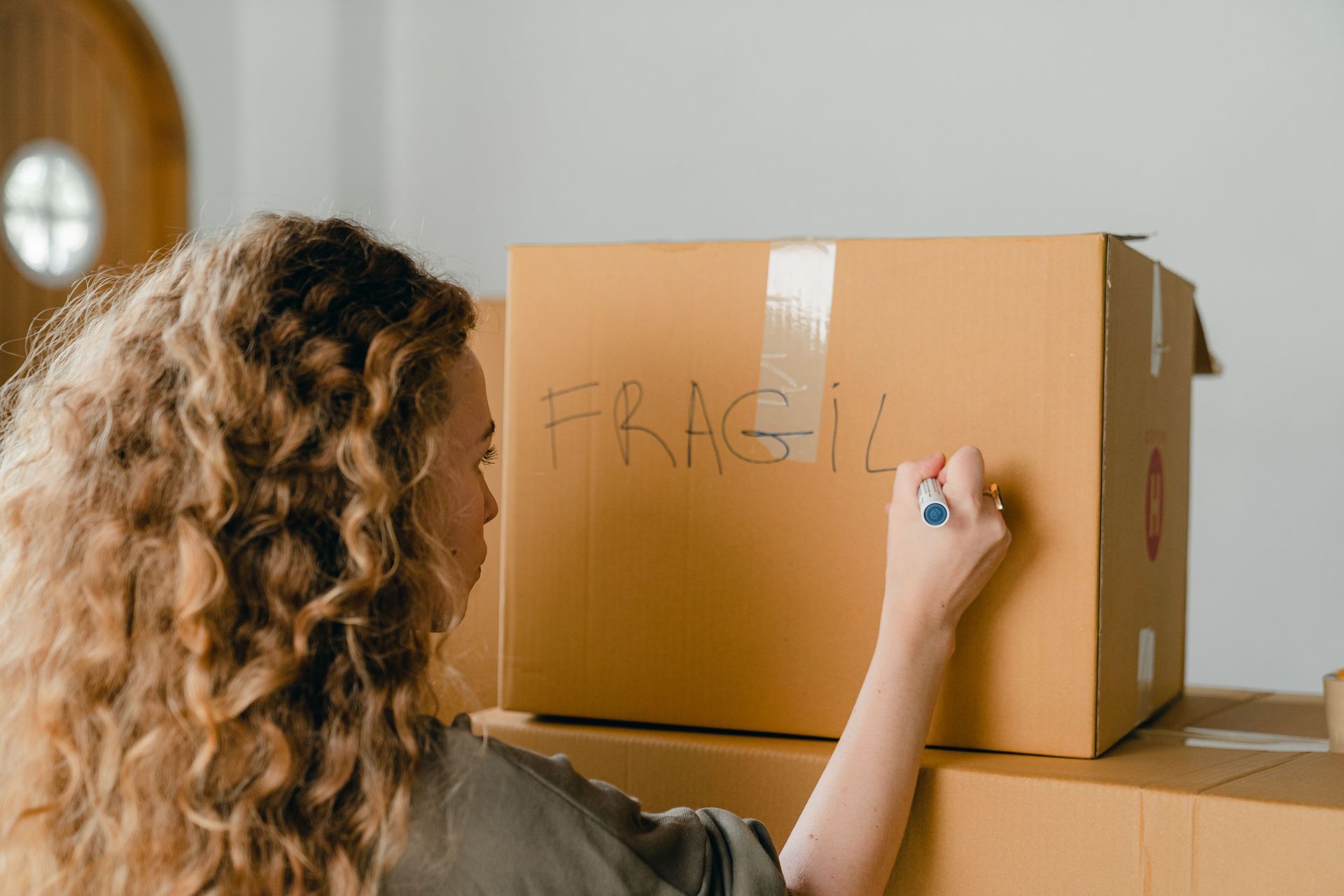
A fragile label identifies a box that needs careful handling, but it doesn't replace proper packing. Glassware, ceramics, and other breakable belongings still need individual wrapping and sufficient cushioning. Write "Fragile" on more than one side and indicate the correct upright orientation when necessary. Use directional arrows only when the contents genuinely require a particular position.
Heavy cartons should also be identified. Marking a box "Heavy" alerts anyone carrying it to the weight, though the contents should still be packed within a manageable lifting limit. For electronics, label accessory boxes with the corresponding device. Keeping cables and removable components identified reduces confusion when equipment is reassembled.
Keep an Essentials Box Separate
Some belongings shouldn't disappear into a moving truck or storage unit. Medications, essential documents, chargers, toiletries, and basic supplies are better kept with you during the move. Pack these items in a clearly identified essentials bag or container. Make sure it remains separate from cartons intended for temporary storage.
If you're relocating to Salt Lake City, our guide to what to expect when moving to Salt Lake City covers additional considerations for planning the transition. An essentials container is also useful when your move takes several days, and some belongings arrive before others.
Avoid Common Moving Box Labeling Mistakes
The most frequent labeling problem is inconsistency. A system that starts with detailed descriptions but ends with cartons marked "Other Stuff" becomes much less useful once everything is stacked. Use the same format throughout the move. If you choose room codes, continue using them. If you're numbering boxes, don't restart the sequence halfway through packing.
Another mistake is labeling boxes before their contents are finalized. Write the label after packing, or update it whenever items are added or removed. Finally, avoid putting every important detail on a single side. A box stored against a wall may become difficult to identify if its only label faces inward.
Keep Your Labels Useful After Moving Day
A good labeling system should continue working after the moving truck is unloaded. As you unpack, mark boxes as completed in your inventory. For belongings that remain stored, retain their box numbers and update their locations whenever you rearrange the space. At STORE-N-LOCK, we encourage renters to think about future access before placing belongings into a unit. You can
explore
storage options from STORE-N-LOCK if your move requires temporary space, then organize your cartons around the items you'll need to retrieve first.